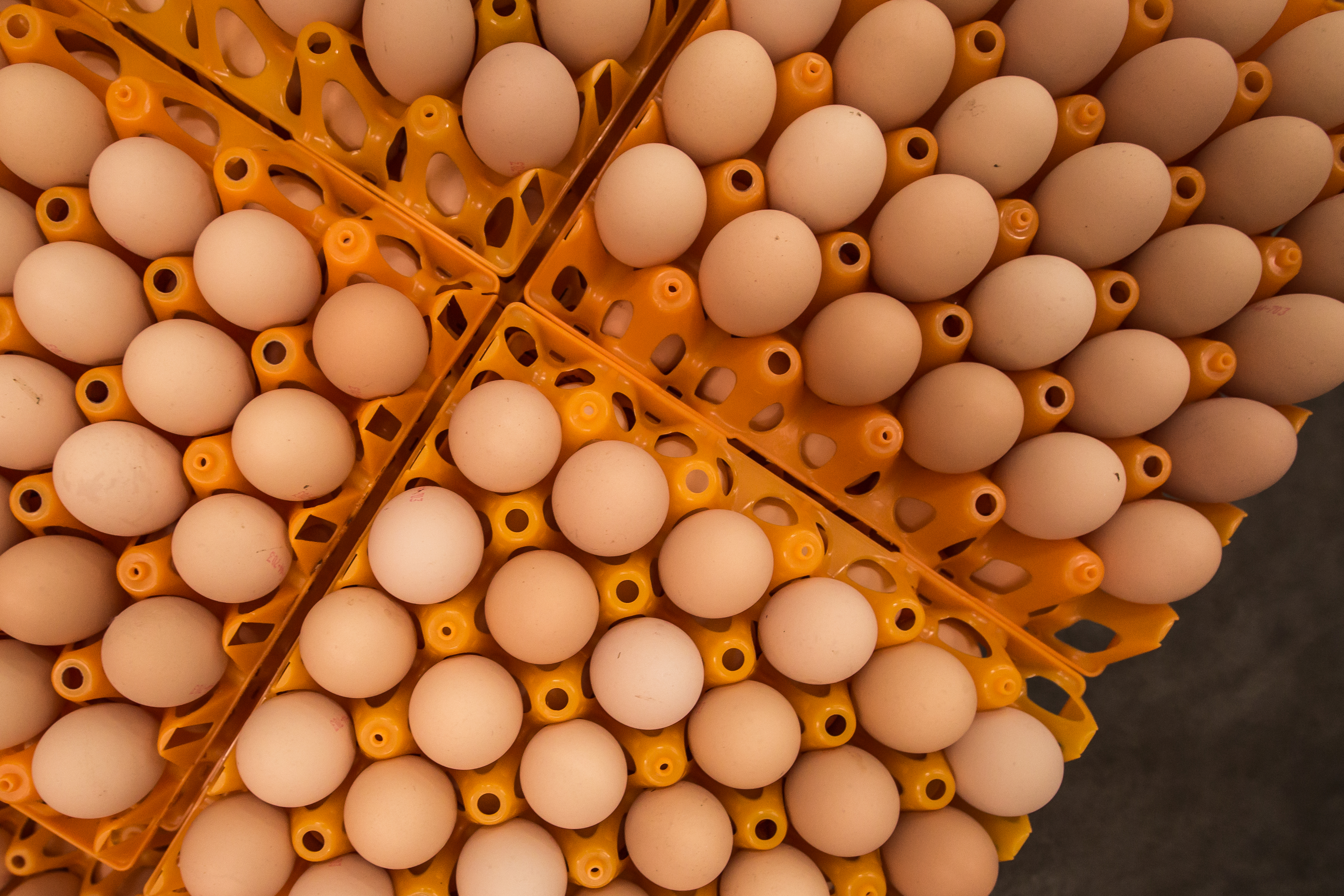
By increasing export volumes, investing more than 150 million euros in cage-free hen houses and purposefully streamlining production, Balticovo's turnover in 2025 grew to 161.5 million euros, while profit reached 35.9 million euros. At the same time, Balticovo also reached a historical milestone last year - for the first time in the company's history, more than one billion eggs were produced in a year, demonstrating both an increase in production capacity and a stable pace of development.
One of the main drivers of turnover growth was exports. In 2025, export revenues reached 116.5 million euros, or 72% of total turnover, compared to 78.2 million euros, or 70% in the previous year. This confirms that Balticovo has strengthened its positions in international markets and continues to actively expand its presence beyond Latvia's borders.
Balticovo's turnover growth has also been driven by the company's targeted strategy to continuously improve and streamline all production and management processes, encompassing the entire value chain. Efficiently organized logistics, as well as feed production, also play a significant role, allowing for better cost control, ensuring stable quality, and increasing the company's overall competitiveness.
“The focus of 2025 was unequivocally Balticovo's transition to cage-free conditions – in fact, we can talk about building another egg production complex. Therefore, last year's results are a logical continuation of what we have purposefully done in recent years – investments in cage-free systems and the streamlining of all production processes,” comments Balticovo Chairman of the Board Vladimirs Mhitarjans on Balticovo's 2025 results, “while the increase in turnover was mainly ensured by our strong positions in exports. At the same time, it must be emphasized - modern egg production is not just about producing eggs. It is the streamlining of the entire process - from our own feed production and rearing of young birds to egg sorting, process digitalization, and logistics. It is precisely this approach that allows us to work more efficiently and be internationally competitive.”
2025 was also significant for Balticovo from an investment perspective. The culmination was a 150 million euro investment project, which covers the creation of new cage-free egg production infrastructure - laying hen houses, young bird rearing infrastructure, and egg sorting capacities. It is important to note that in 2025, Balticovo concluded a loan agreement with the Nordic Investment Bank (NIB) for 30 million euros. Balticovo is the first private capital company in Latvia to receive such funding. This confirms the trust of international financial institutions in the company's development strategy and sustainability goals.
Balticovo continues to implement a strategic transition to cage-free and free-range laying hen farming. Currently, the company's flock in Latvia has approximately 3.5 million laying hen places, of which about 1 million are intended for young birds, and an average of 3 million eggs are produced daily. It is important to add that cage-free facilities have also been built for young birds, which will ensure the continuity of a high-quality flock and compliance with future market requirements.
The transition to cage-free egg production is not only a market requirement but also a conscious choice by Balticovo - the full-cycle production model, which the company implements itself, ensures control over all stages, from feed production to egg sorting, processing, and sales. This approach guarantees adherence to the highest quality standards and production transparency.
Last year, Balticovo reached another significant milestone - for the first time in the company's history, Balticovo produced more than one billion eggs in a year. This result was ensured by targeted investments in production expansion and efficiency improvement.
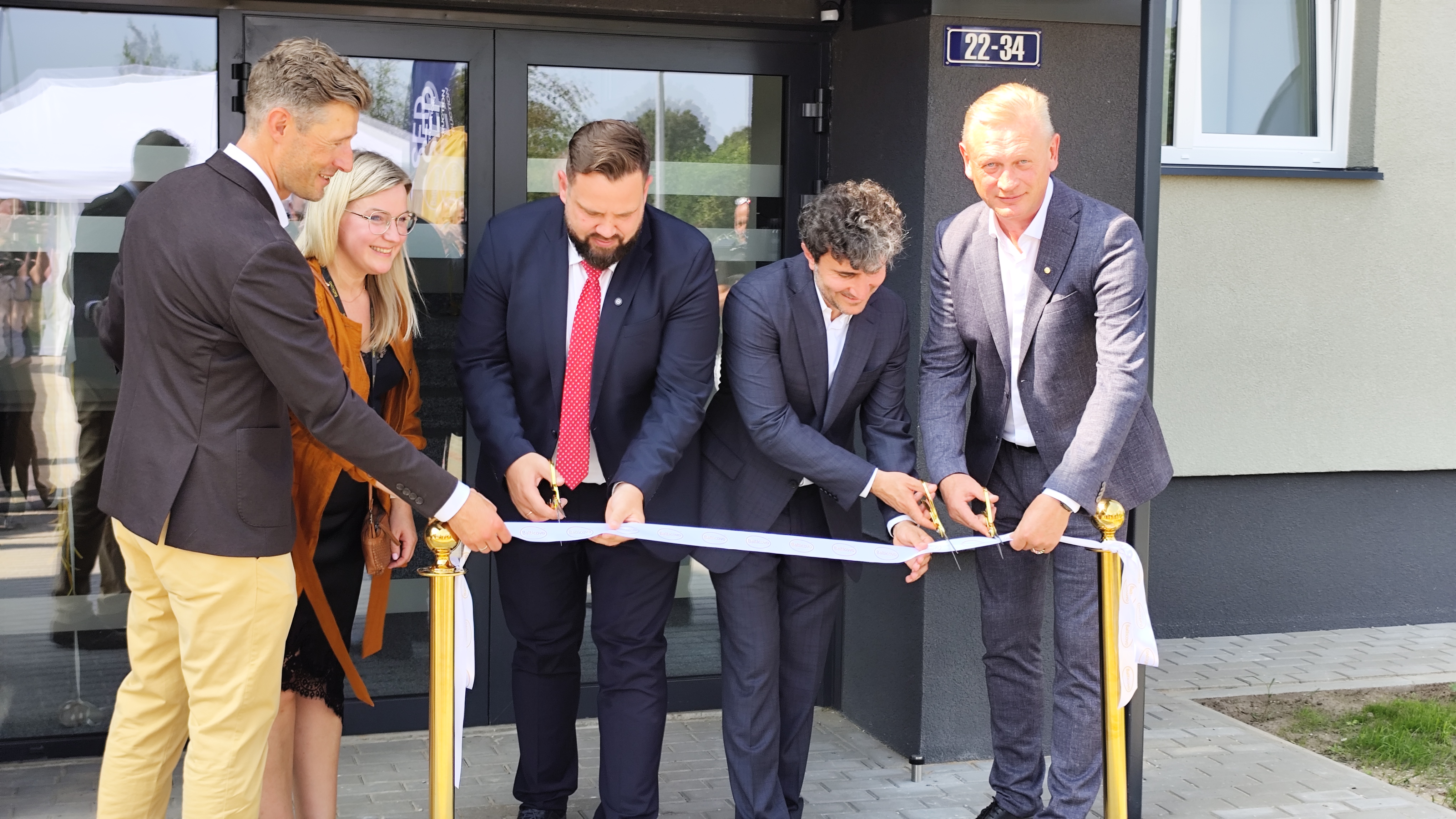
Balticovo has opened a new residential building for employees in Iecava. The project, valued at over two million euros, has …
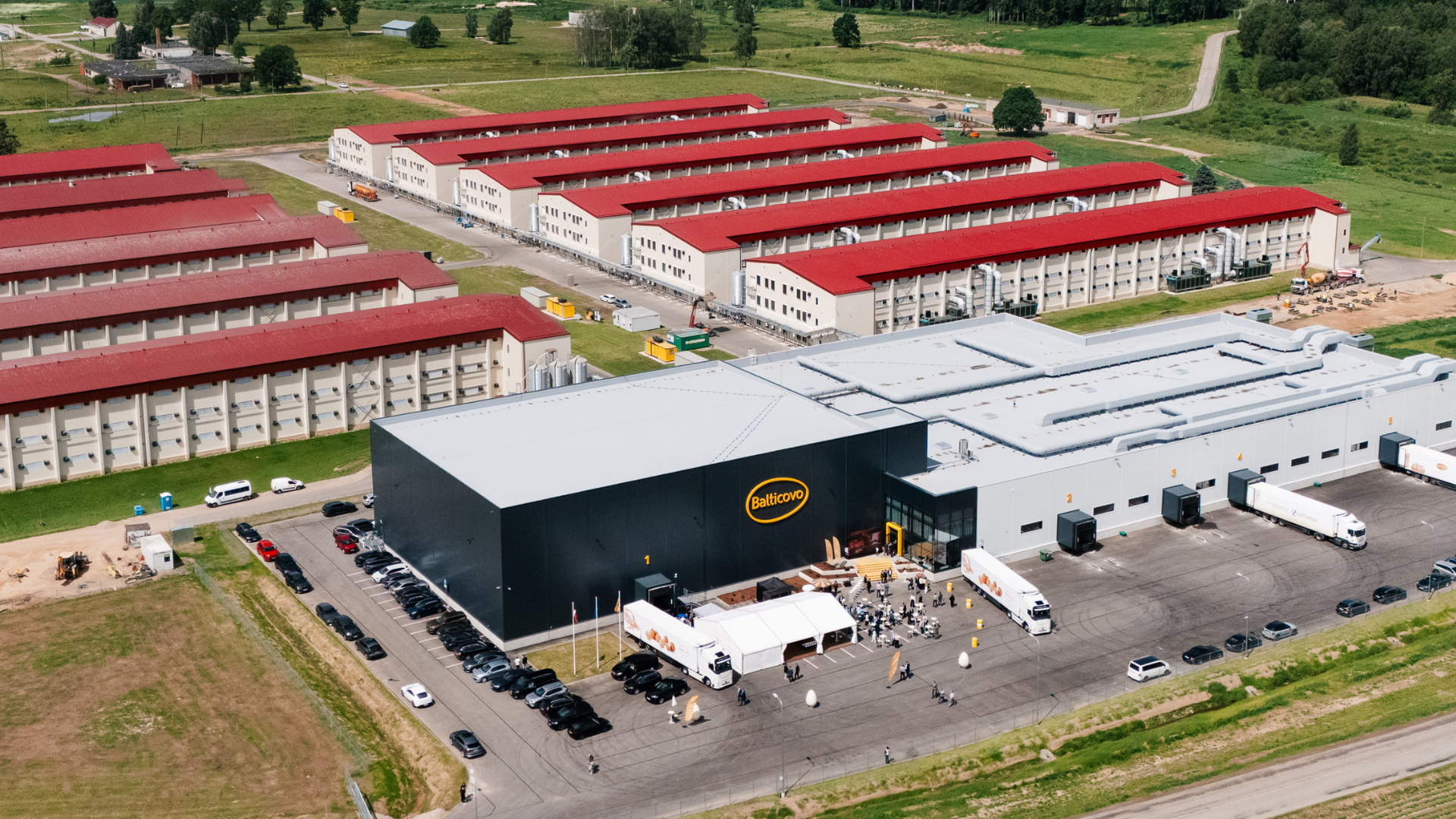
Iecavā atklāts uzņēmuma “Balticovo” jaunais ārpus sprostu ražošanas komplekss, kura izveidē investēti aptuveni 120 miljoni eiro.


